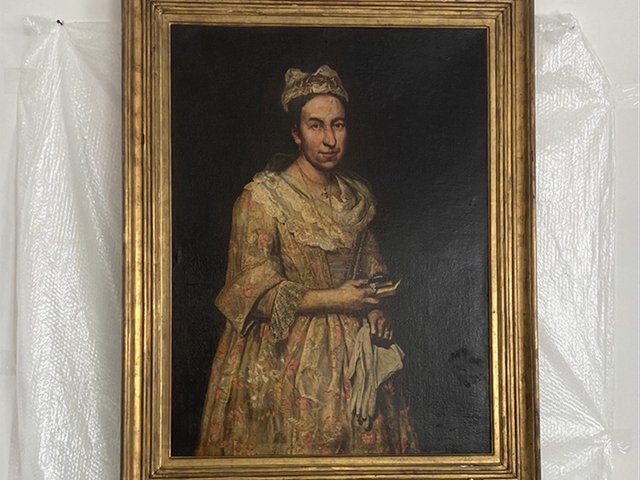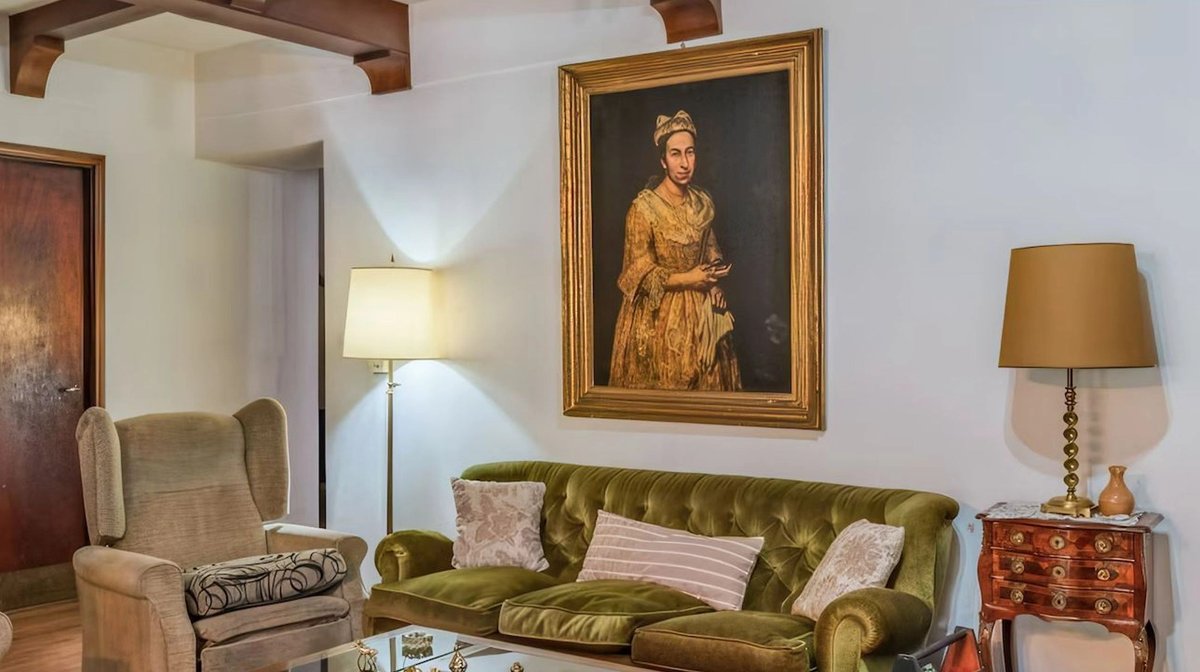

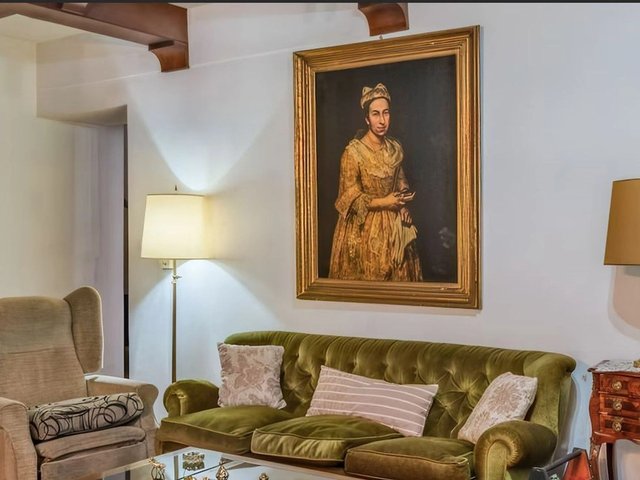
Like a vision she appeared… on a real-estate website. The Baroque portrait of the Contessa Colleoni was rediscovered this summer when it appeared in an online catalogue advertising the sale of a house in Argentina. It was identified as a work from the collection of Jacques Goudstikker, looted by the Nazis in the Netherlands in 1940.
The police have become involved, arresting the homeowner Patricia Kadgien and her husband, searching the property and seizing the painting, Portrait of a Lady by Giuseppe Ghislandi, while investigating several other problematic works of art. Patricia inherited the art from her father, Friedrich Kadgien, a Nazi official who had fled Germany after the war and, like so many other Nazis, settled in Argentina, dying there in 1978.
Argentina was one of 44 countries that agreed to the Washington Conference Principles on Nazi-Confiscated Art in 1998 and the first Latin American country to endorse the updated Best Practices in 2024. These international commitments could not in themselves provide a legal right of action for the Goudstikker heirs if they sought to recover the art.
Civil law countries with a Napoleonic civil code like Argentina allow possessors to gain title to property through acquisitive prescription after a certain period of time; in Argentina, it is two years for good-faith possessors, 20 years even without good faith. Good faith usually equates with honesty and being unaware of a defect in title. In civil law countries it is usually presumed. This would appear to give solid grounds for assuming Kadgien’s ownership is secure as a matter of law.
But the devil is so often in the details. In civil law countries, to benefit from acquisitive prescription the possession usually needs to be continuous and open. Is possession in a private home for all these years sufficiently “open”?
Another twist: the Argentinian art lawyer Juan Javier Negri tells me that the law of his country will not bar civil actions arising out of “crimes against humanity”. Might the taking during the Holocaust be considered part of a crime against humanity? The question does not seem to have been tested by the courts.
The case also raises questions about Nazi-looted art held in private collections. While the leading museums and associations in Europe have adopted standards for dealing with claims for Nazi loot in their holdings, there is no equivalent for private collectors.
When the Gurlitt hoard was revealed in Munich in 2013, the issue was thrust into the spotlight. Germany has a very strict 30-year prescription period for recovery claims. A proposal was put to the German legislature to create an exception for Holocaust-era art losses (called “Lex Gurlitt”), but it stalled. Before he died, however, Cornelius Gurlitt agreed to abide by the Washington Conference Principles, the first private collector to do so publicly.
Perhaps Kadgien will do the same. As Negri has written in his newsletter, even with good title to the painting, no self-respecting buyer or art dealer would touch it. The market has its own way of resolving such issues; the big auction houses, for instance, will only sell works with Nazi-related provenance after a full and final settlement with the heirs of the victim.
Due to police involvement, the matter is out of Kadgien’s hands. But the case can prompt the art world to ask how best to deal with Nazi loot that is privately owned. Should it be by amending the time bars, giving heirs strong rights of recovery through the courts? Or does the market sufficiently root out toxic provenance? As with Gurlitt, the current scandal might inspire solutions to the problem—and hopefully ones that can stick.